Haleakalā National Park
Park Closure Due to Tropical Storm Lala — Both districts of Haleakalā National Park closed (8/14) due to Tropical Storm Lala—Kīpahulu at 5:00 PM and Summit at 6:30 PM. The park will reopen when it is safe to do so. For county road closures, visit mauicounty.gov/643/Road-Closure-Notifications.
No Water at Hosmer Campground — As of September 30, 2025, water at Hosmer Campground in the Summit District is shutoff due to a waterline break. Water is available 24-hours at Headquarters Visitor Center one mile up the road. At this point we don't have an estimate for when repairs will be complete.
Expect Long Waits at the Summit Entrance Station Before Sunset — Due to a high volume of traffic, cars may be temporarily turned around at the gate when capacity is reached. Purchasing a pass online does not guarantee entry at sunset. To ensure timely access, arrive 3 hours before sunset.
Limited Parking and Traffic Delays in Summit District — Beginning Monday, January 12, 2026 Haleakalā Visitor Center (summit district) parking lot will have limited parking due to a water infrastructure project. Expect traffic delays. The project will last several months.
Drive Cautiously - Endangered Birds on Roadway — Nēnē (Hawaiian geese) and ʻuaʻu (Hawaiian petrel) are nesting in the park and may land on or frequent park roads, parking lots, and road leading up to the park. Drivers are reminded to drive at the posted speed limits and exercise caution.
Source: US National Park Service, refreshed several times a day.
Introduction
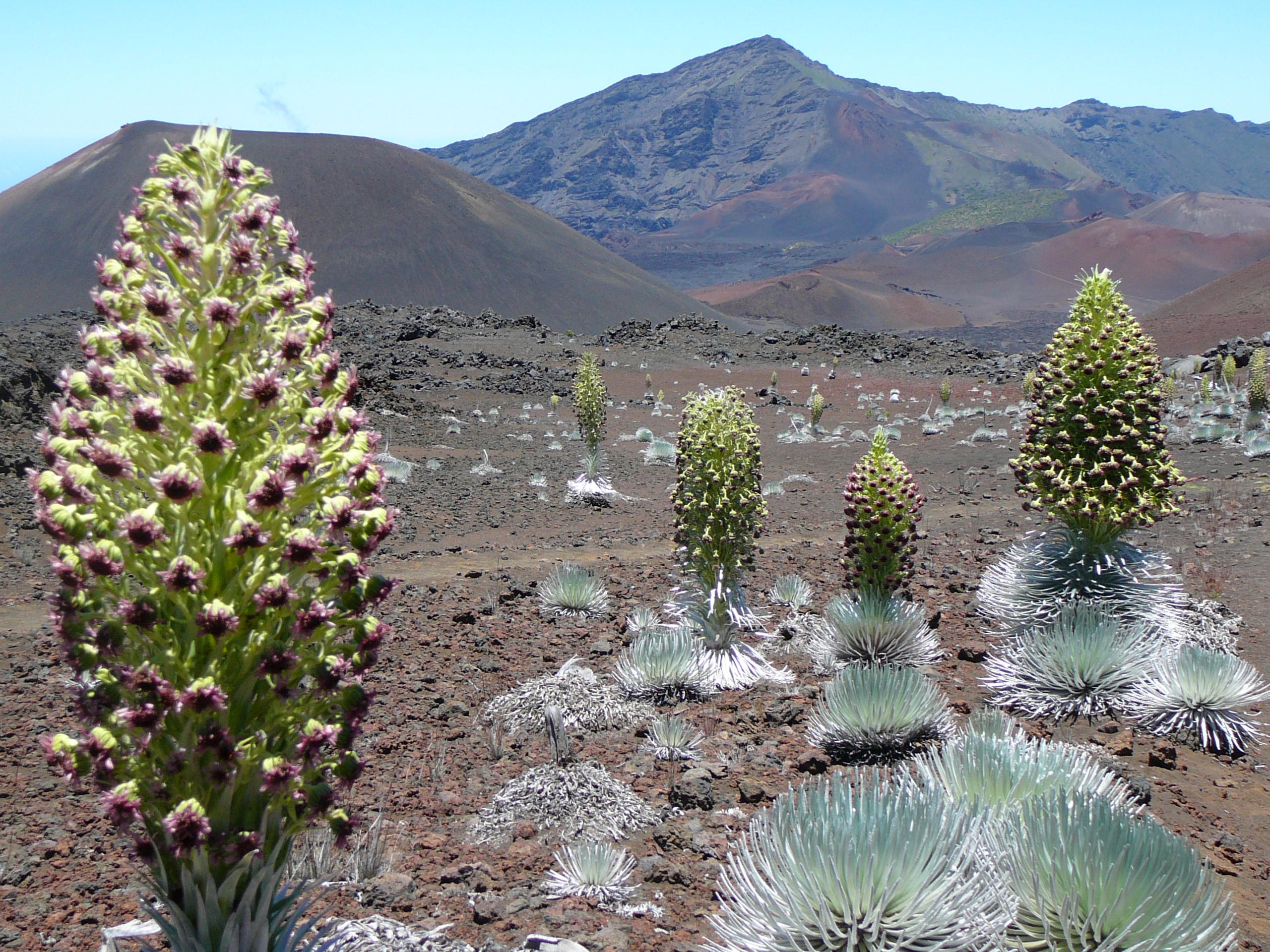
Le parc national de Haleakalā est situé sur l'île de Maui, à Hawaï. Il présente un immense cratère volcanique et des écosystèmes divers, attirant les visiteurs pour ses paysages uniques et ses possibilités d'activités de plein air. Beaucoup viennent pour admirer le lever du soleil depuis le sommet, un spectacle devenu une expérience populaire pour les voyageurs en quête de beauté naturelle.
Établi en 1916, le parc couvre plus de 30 000 acres, avec une partie importante désignée comme zone sauvage. Le terrain comprend d'amples coulées de lave et des cônes de cendre, créant un environnement austère mais fascinant. Les visiteurs doivent être préparés à des conditions météorologiques variées et à la nécessité de réservations pendant les périodes de pointe.
En images
À savoir
Bon à savoir
Photo: NPS