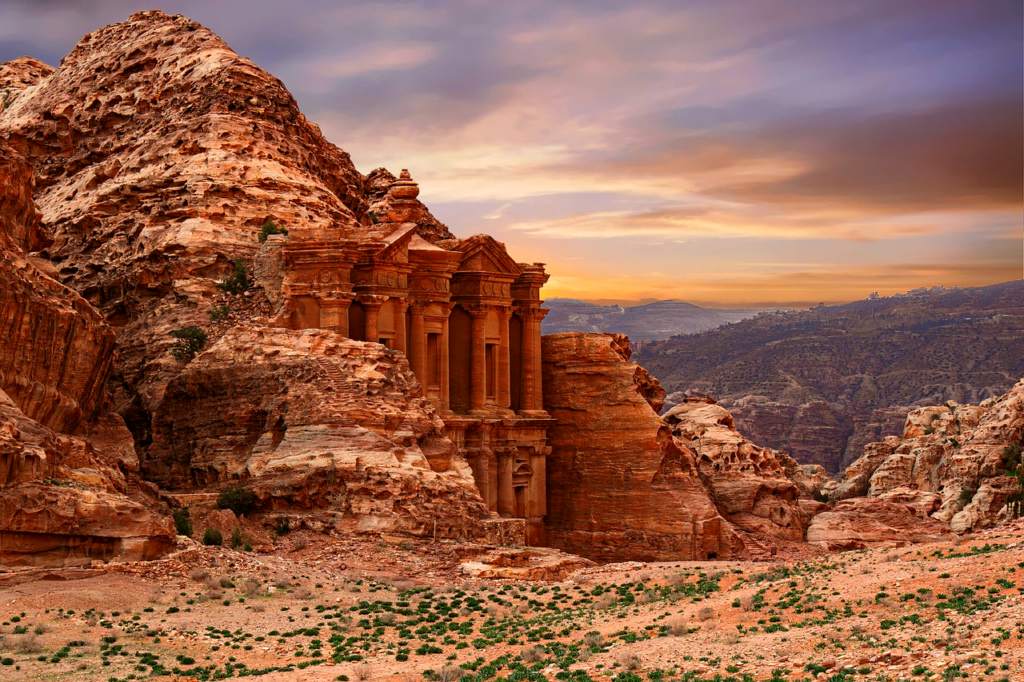
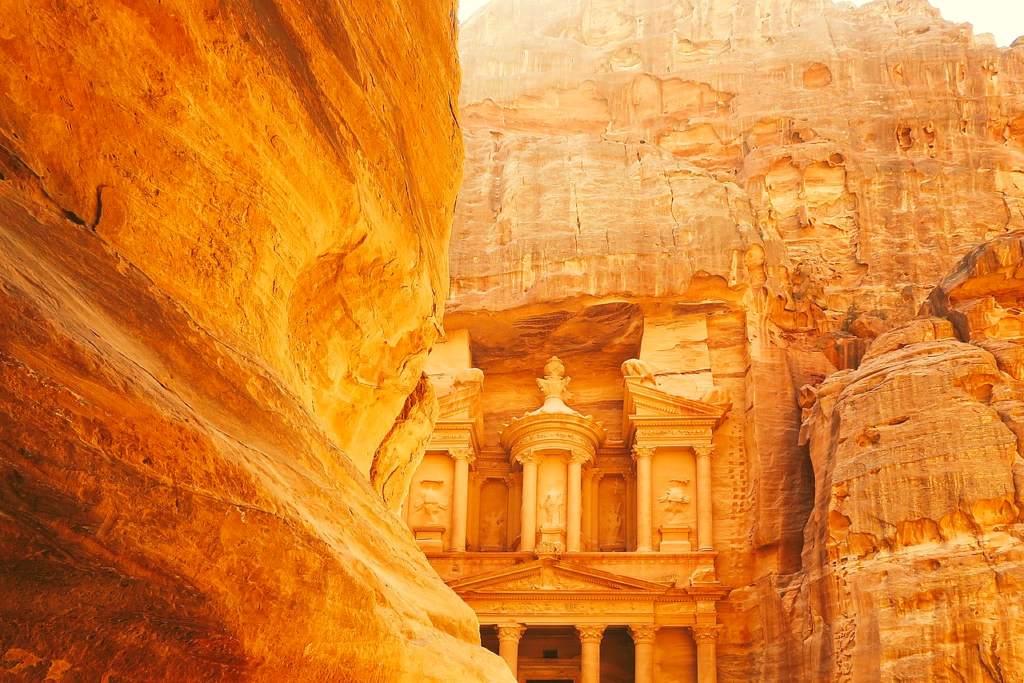
Petra, an archaeological wonder in Jordan, captivates visitors with its rock-cut architecture and water conduit system. The entrance, known as the Siq, leads you through a narrow canyon, revealing the iconic Treasury at the end. The colors and textures of the sandstone create a unique atmosphere that feels both ancient and alive.
Read more
Walking through Petra, you can sense the history that permeates the air. The ruins tell stories of the Nabataean Kingdom, trade routes, and the passage of time. Expect to spend a few days exploring the vast site, as each corner offers something new, from temples to tombs, all carved into the rock face.
Highlights
High Place of Sacrifice
Site for ancient rituals with great views
Monastery
Large temple with panoramic views
Petra Museum
Learn about Petra's history and culture
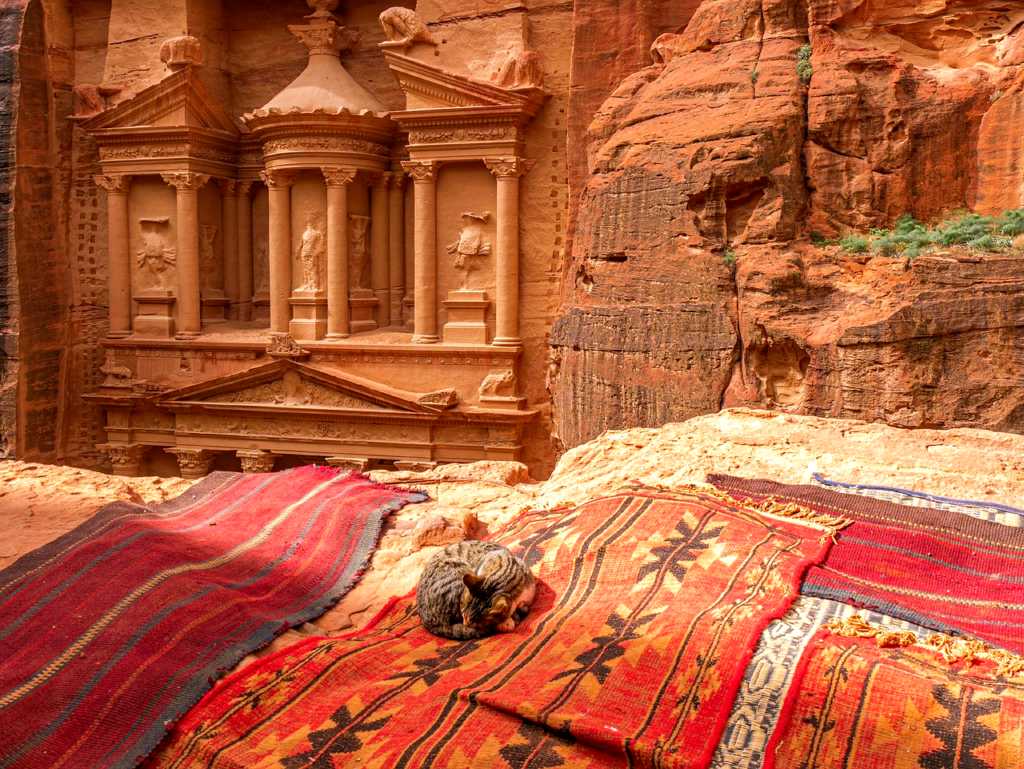
Treasury
Iconic facade carved into rock
Routes through here
Every route opens in the planner as your own copy: change any stop, any night.
In pictures
Sightseeing
Things to do
Local food and drinks
Local traditions
Do's and don'ts
Practical
At a glance
- Founded
- 600 BC
- Population
- 3.000
- Accessibility
- Some areas are challenging for those with limited mobility
- Price level
- Mid-range
Things to know
History
Petra was established as the capital of the Nabataean Kingdom around the 6th century BC. It thrived as a trading hub, connecting various routes across the region. The Romans took control in AD 106, further expanding the city and its infrastructure, including roads and water systems.
However, a devastating earthquake in AD 663 led to its decline. Petra was largely forgotten until the early 19th century when Swiss explorer Johann Ludwig Burckhardt rediscovered it. His accounts sparked interest in the ancient city, leading to its eventual recognition as a UNESCO World Heritage Site.
Photo: ChiemSeherin · Pixabay Content License · Pixabay
Photo credits (2)
- ChiemSeherin · Pixabay Content License · Pixabay
- StockSnap · Pixabay Content License · Pixabay