Ostia Antica
This concerns Italy as a whole. Check official travel advisories before you go. Details
From GDACS, the disaster alert system of the UN and the EU.
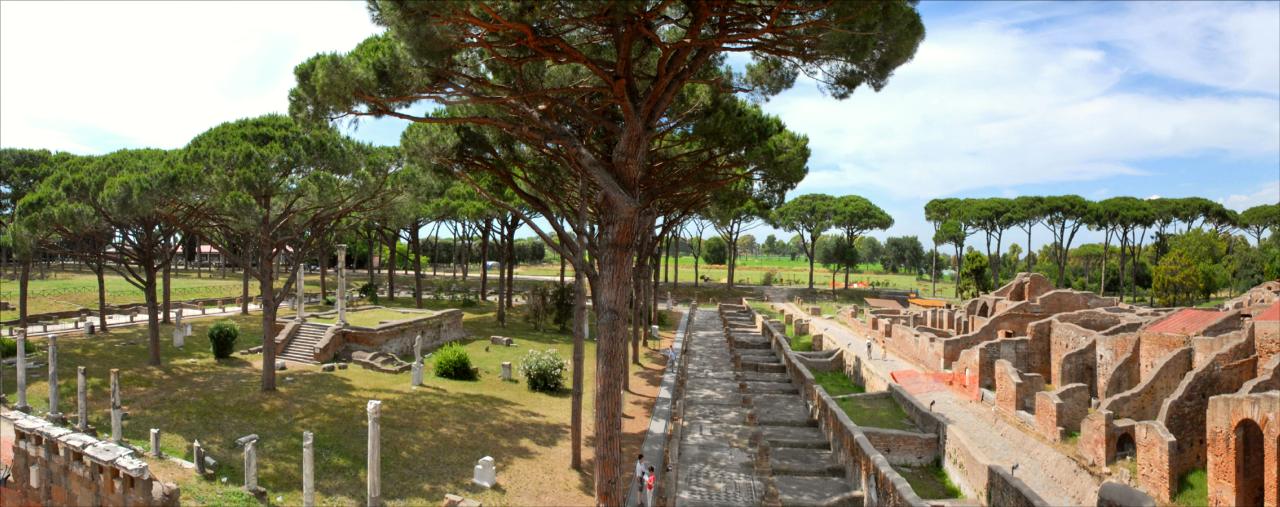
Ostia Antica offers a glimpse into ancient Roman life, with well-preserved ruins that tell stories of a bustling port city. Walking through the remains of temples, baths, and homes, you can almost hear the echoes of traders and citizens from centuries past.
Read more
The site is less crowded than Rome's major attractions, allowing for a more contemplative experience. The expansive grounds invite exploration, with mosaics and frescoes that showcase the artistry of the time.
Highlights
Baths of Neptune
Features beautiful mosaics and ancient bathing areas.
Ostia Antica Museum
Showcases artifacts from the archaeological site.
Piazza delle Corporazioni
A historical marketplace with interesting ruins.
Theater of Ostia
An ancient theater still hosting performances.
Sightseeing
Things to do

Local food and drinks

Local traditions
Do's and don'ts
Practical
At a glance
- Founded
- 600 BC
- Population
- 1.000
- Accessibility
- Some areas are accessible, but many paths are uneven.
- Price level
- Mid-range
Things to know
History
Ostia Antica was founded in the 4th century BC as the port of ancient Rome. It thrived as a commercial hub, with trade routes connecting it to the Mediterranean. The city reached its peak during the 2nd century AD, boasting a population of around 50,000.
As the Tiber River silted up, Ostia's importance declined, leading to its abandonment by the 9th century. Rediscovered in the 19th century, extensive excavations have revealed a wealth of artifacts and structures, making it a key site for understanding Roman urban life.
Photo: Wikipedia / Wikimedia Commons