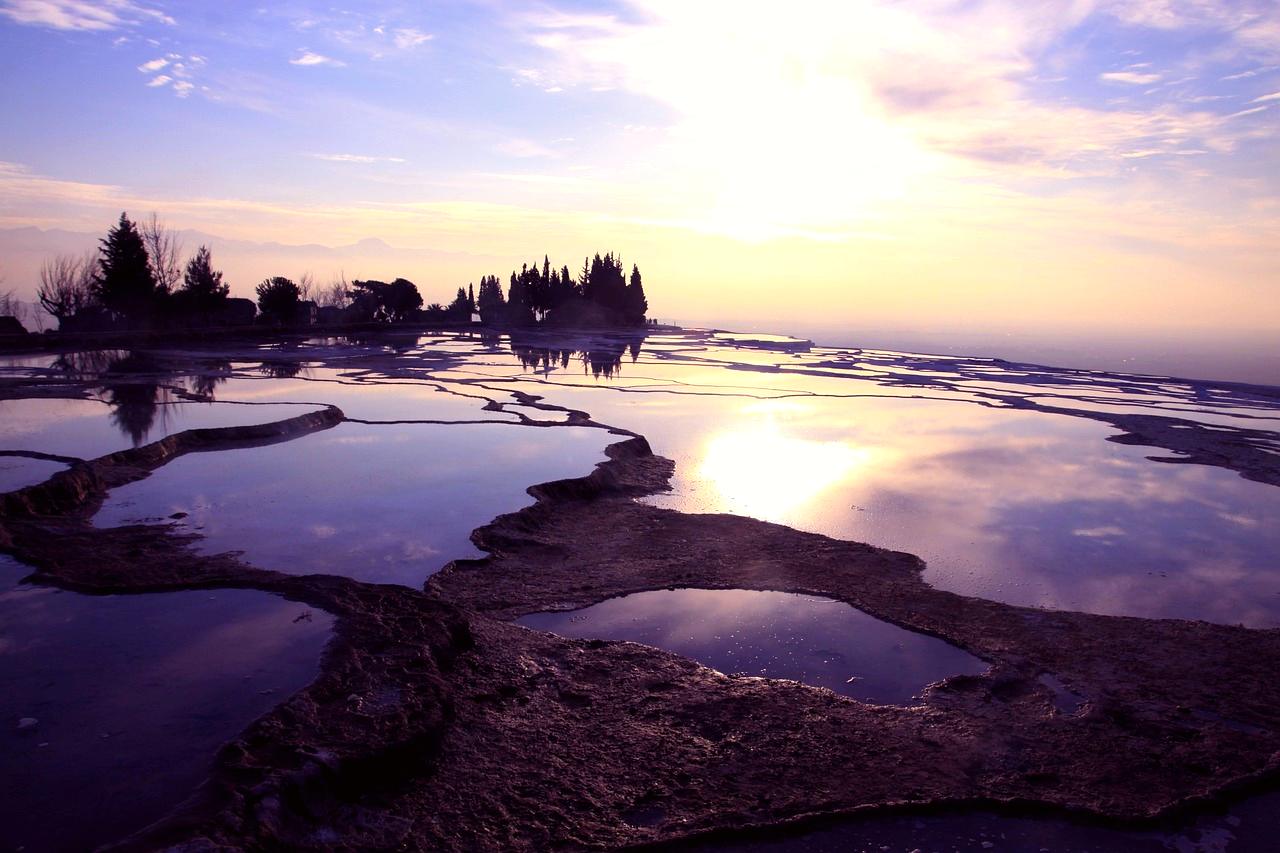
Pamukkale's terraces at sunrise
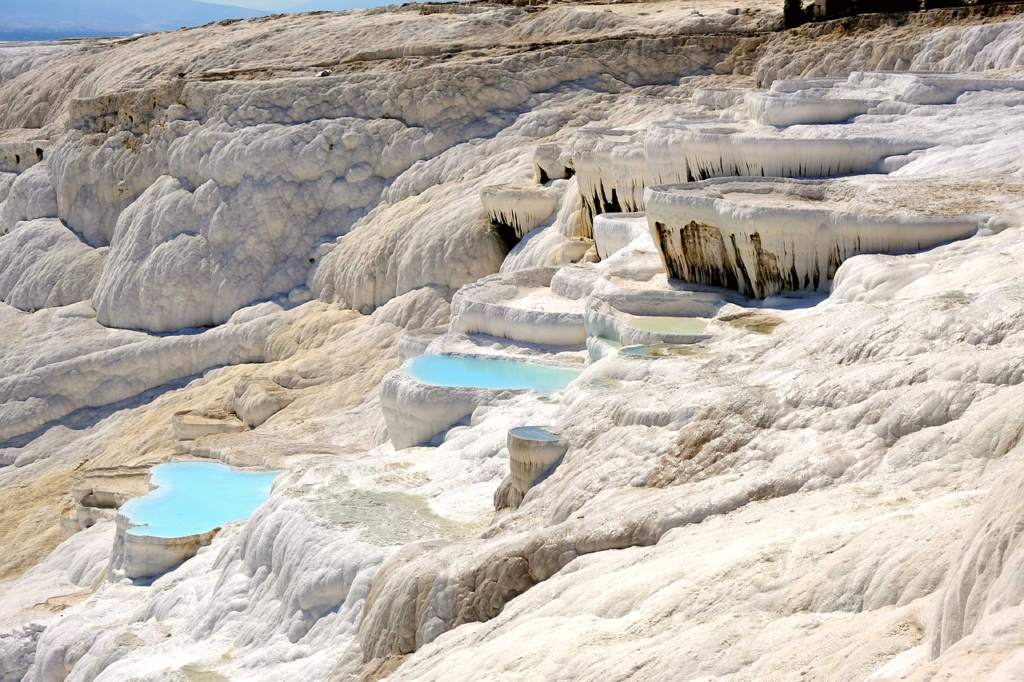
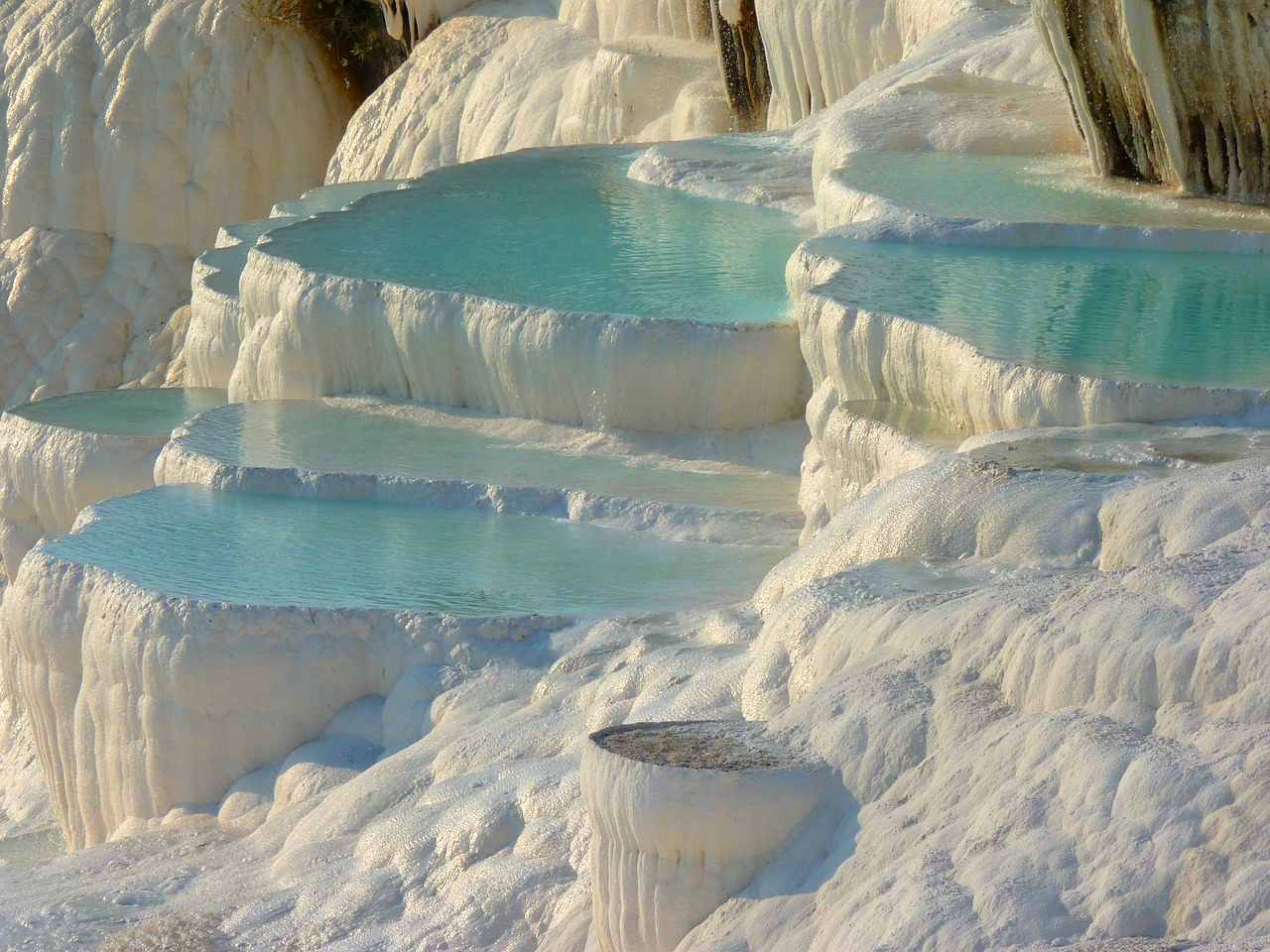
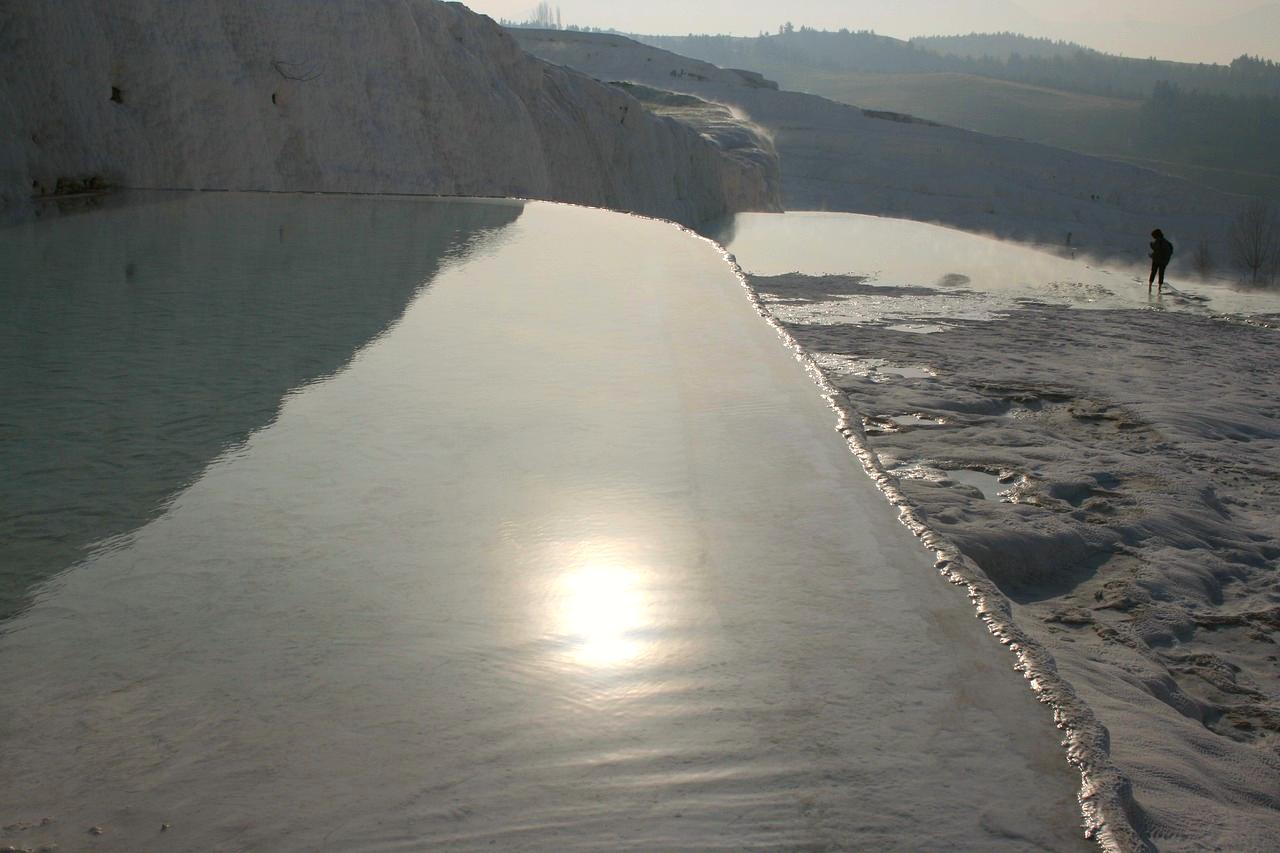
The travertine terraces of Pamukkale are a sight to behold, especially at sunrise when the soft light highlights their unique formations. The thermal waters flow down the white travertine, creating pools that shimmer in the morning glow. Visitors often come to soak in the warm waters, which are said to have therapeutic properties. However, be prepared for crowds, especially during the summer months. Arriving early can help you enjoy a quieter experience. Don't forget to wear water shoes, as the surfaces can be slippery.
Explore the ruins of Hierapolis
Just a short walk from the terraces, the ancient city of Hierapolis offers a glimpse into the past. The well-preserved ruins include a grand theater and ancient baths, all set against the backdrop of the travertine pools. Walking through the site, you can almost hear the echoes of history. Take your time to explore, as the area can be quite expansive. Bring water and wear comfortable shoes, as the terrain can be uneven. Guided tours are available, but wandering on your own can also be rewarding.
Taste local cuisine in Pamukkale
After a day of exploring, treat yourself to local dishes at one of the restaurants in Pamukkale. Try the gözleme, a savory Turkish flatbread filled with cheese and spinach, or sample the kebabs, which are grilled to perfection. Many eateries offer outdoor seating, allowing you to enjoy the view of the terraces while you dine. Prices are generally reasonable, but be sure to check the menu before ordering. A refreshing ayran, a yogurt-based drink, pairs well with your meal.