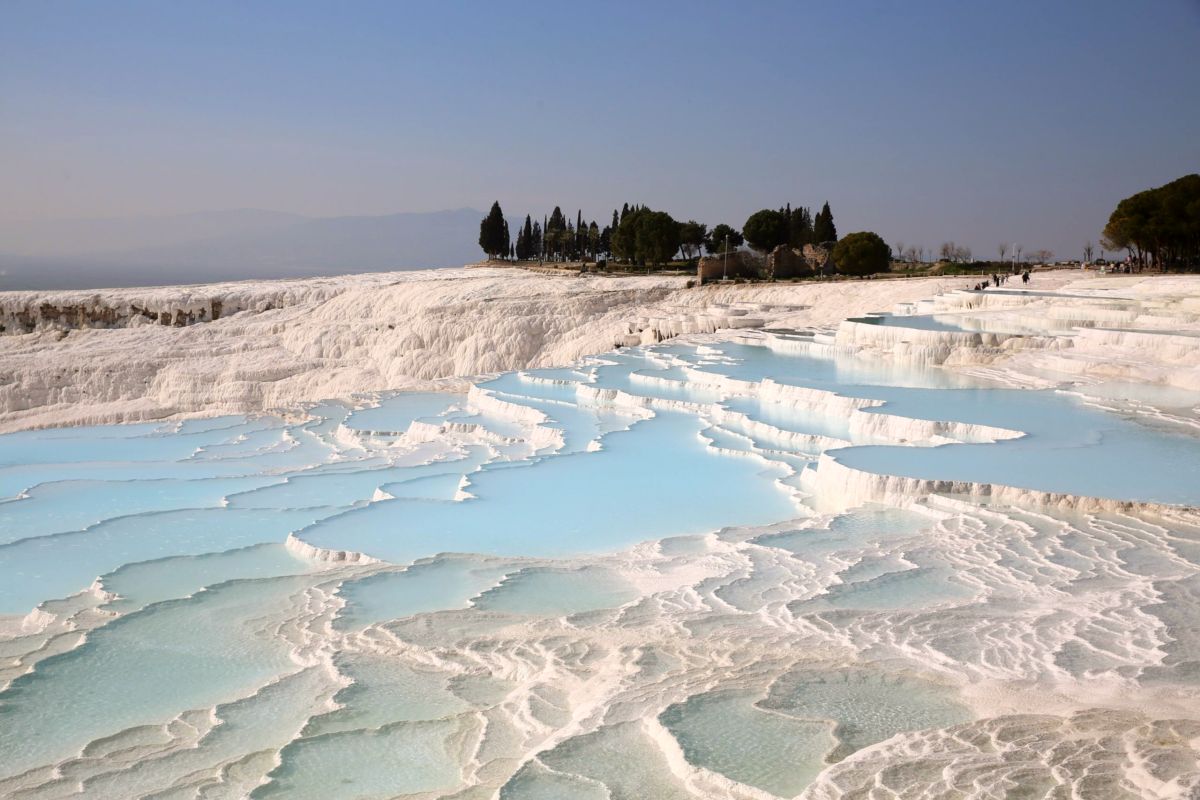
Pamukkale es un destino impresionante conocido por sus únicas terrazas de travertino, formadas por aguas termales ricas en minerales. Los visitantes a menudo quedan cautivados por las brillantes formaciones blancas que parecen una cascada congelada, creando un paisaje surrealista contra el fondo de exuberante vegetación.
Highlights
Cleopatra's Pool
A historic thermal pool for swimming
Hierapolis Ancient City
Explore the ruins of this ancient city
Hierapolis Theatre
An impressive ancient Roman theatre
Pamukkale Travertines
Famous for its stunning white terraces
Sightseeing
Qué hacer

Comida y bebida local

Tradiciones locales
Qué hacer y qué evitar
Practical
About Pamukkale
Más allá de las terrazas, las antiguas ruinas de Hierápolis añaden una profundidad histórica a la experiencia. La combinación de belleza natural y significado arqueológico hace de Pamukkale un lugar que debes visitar, aunque puede llenarse de gente durante las temporadas turísticas pico.
Cosas que saber
Bueno saber
Historia
La historia de Pamukkale se remonta a tiempos antiguos cuando era conocida como Hierápolis, fundada en el siglo II a.C. La ciudad prosperó gracias a sus aguas termales, atrayendo a visitantes en busca de curación y relajación.
A lo largo de los siglos, Hierápolis se convirtió en un importante centro religioso, con numerosos templos y monumentos. El sitio fue finalmente abandonado, pero su belleza natural y su importancia histórica lo han convertido en un sitio del Patrimonio Mundial de la UNESCO.
Foto: Wikipedia / Wikimedia Commons