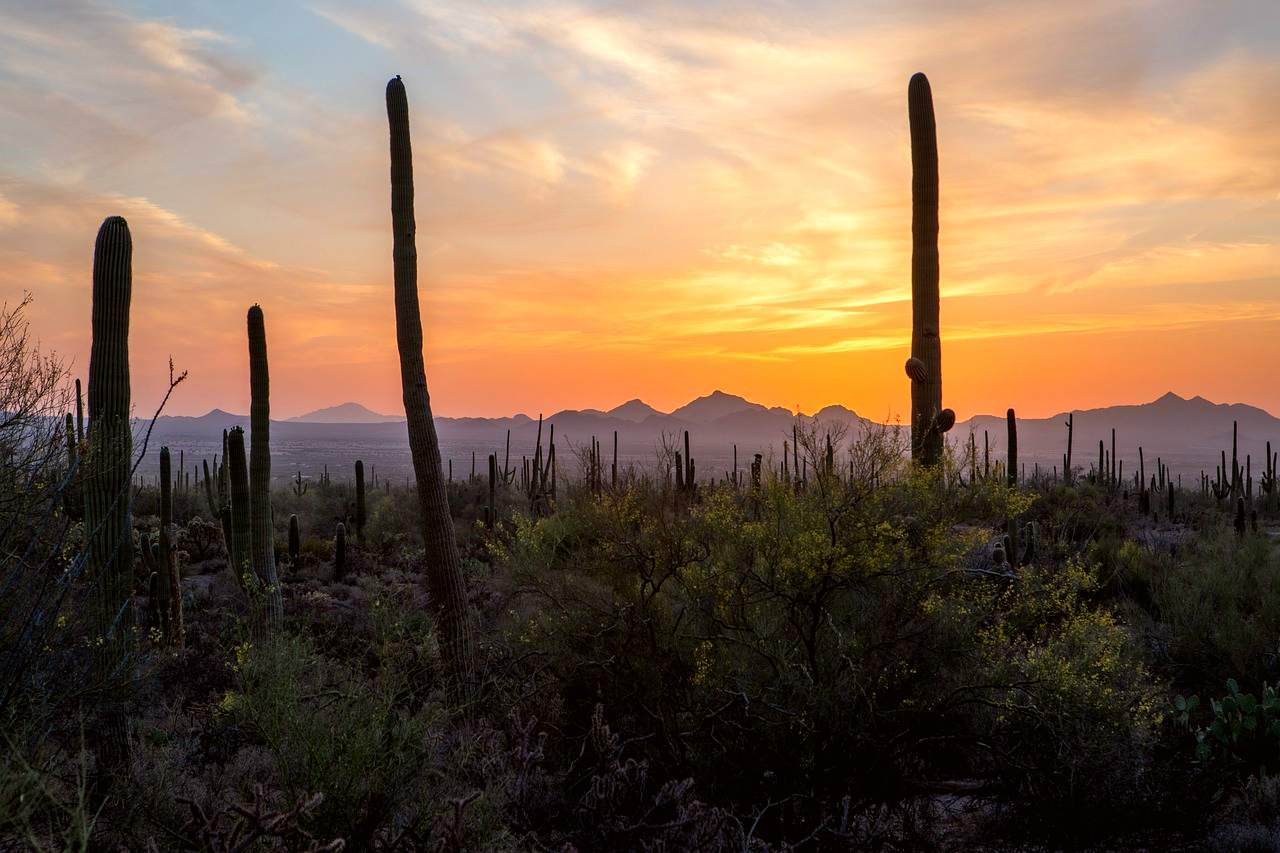
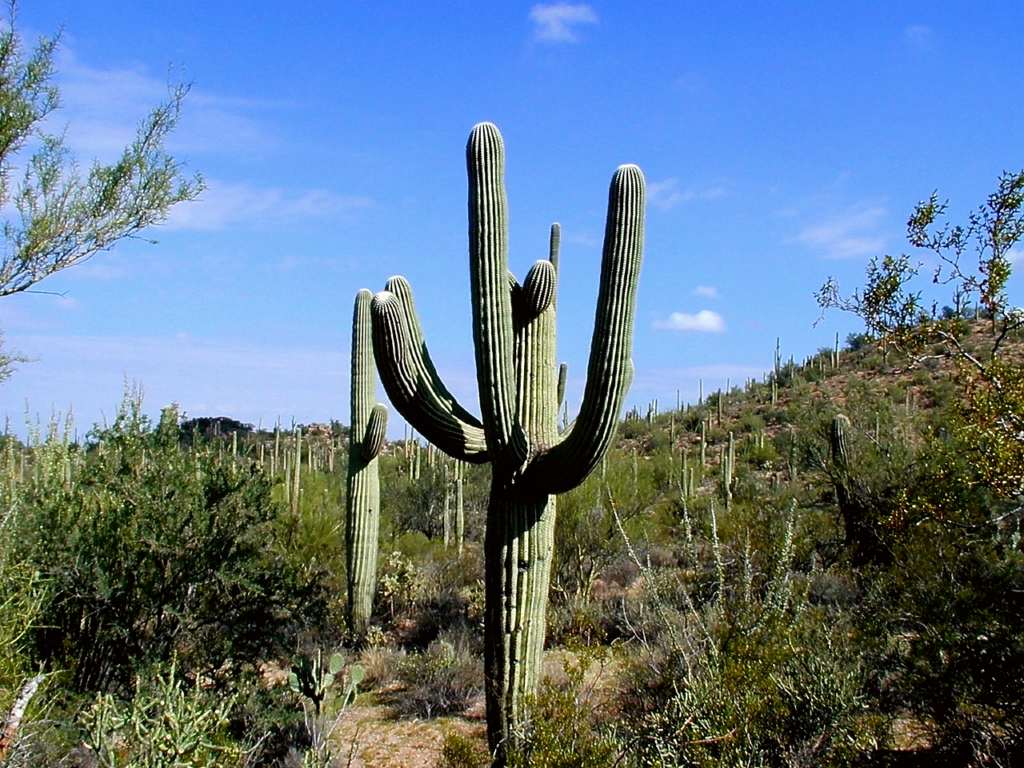
Saguaro National Park is a vast expanse of desert landscape, showcasing the iconic saguaro cacti that can grow over 40 feet tall. Visitors often find themselves surrounded by unique flora and fauna, with trails that lead through diverse ecosystems. The park is divided into two districts, each offering distinct experiences and views of the Sonoran Desert.
Read more
The park is a haven for outdoor enthusiasts, with numerous hiking trails and scenic drives. While the beauty of the cacti and desert vistas is undeniable, be prepared for the heat, especially in summer months. Bring plenty of water and plan your visits accordingly to avoid the midday sun.
Highlights
Routes through here

Every route opens in the planner as your own copy: change any stop, any night.
In pictures
Sightseeing
Things to do
Local food and drinks
Local traditions
Do's and don'ts
Practical
At a glance
- Established
- 1933
- Accessibility
- Some trails are wheelchair accessible, check specifics
- Price level
- Budget
Things to know
History
Saguaro National Park was established as a national monument in 1933, primarily to protect the saguaro cactus and its habitat. It became a national park in 1994, expanding its area to include the Tucson Mountain District, which was added in 1964. The park now spans over 91,000 acres, showcasing the rich biodiversity of the Sonoran Desert.
The park's history is intertwined with the cultural significance of the saguaro cactus to Indigenous peoples. The cacti have been a source of food, shelter, and materials for centuries. Today, the park serves as a vital conservation area, preserving the unique desert ecosystem for future generations.
Photo: brianhalbachphotography · Pixabay Content License · Pixabay
Photo credits (2)
- 127071 · Pixabay Content License · Pixabay
- rauschenberger · Pixabay Content License · Pixabay