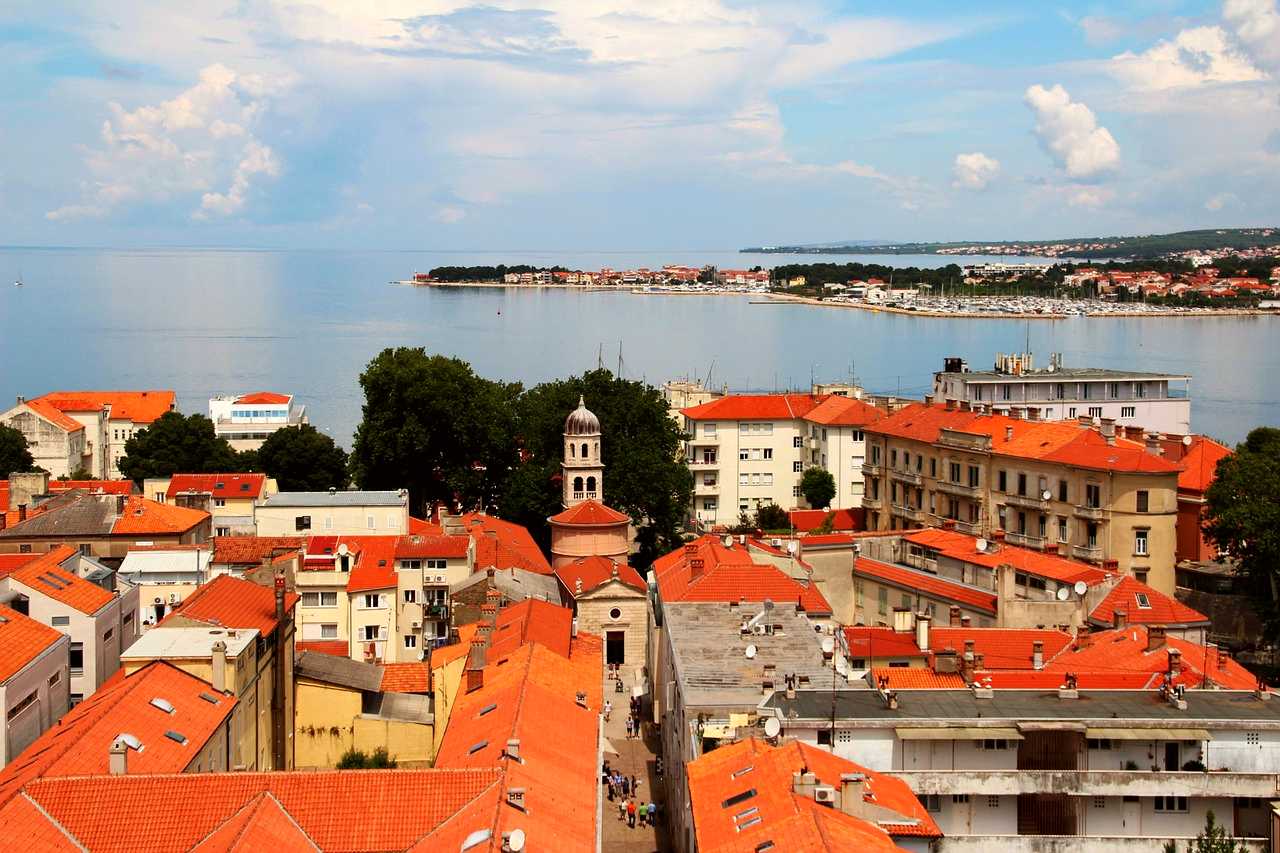
Zadar is a captivating blend of ancient history and vibrant modern life, nestled along Croatia's stunning coastline. Visitors are often enchanted by its charming old town, where Roman ruins coexist with contemporary art installations, creating a unique atmosphere.
Read more
The city's waterfront is equally mesmerizing, featuring the famous Sea Organ and Sun Salutation, which offer a sensory experience unlike any other. Zadar's laid-back vibe encourages exploration, whether wandering through narrow streets or enjoying a sunset by the sea.
Highlights
Greeting to the Sun
A solar-powered light installation
Museum of Ancient Glass
Showcasing glass artifacts from history
Sea Organ
A unique musical installation by the sea
Zadar Cathedral
A stunning cathedral with rich history
Routes through here
Every route opens in the planner as your own copy: change any stop, any night.

Sightseeing
Things to do
Local food and drinks
Local traditions
Do's and don'ts
Practical
At a glance
- Founded
- 300 BC
- Population
- 75.000
- Accessibility
- Most areas are walkable, but some have cobblestones
- Price level
- Mid-range
Things to know
History
Zadar's history dates back to the Roman era, when it was known as Iadera, a significant administrative center. Over the centuries, it has been influenced by various cultures, including the Venetians and Austrians, each leaving their mark on the city's architecture and traditions.
In the 20th century, Zadar faced challenges during World War II and the Yugoslav Wars, but it has since rebuilt and revitalized itself. Today, it stands as a testament to resilience, blending its rich past with a dynamic present.
Photo: InstagramFOTOGRAFIN · Pixabay Content License · Pixabay
Photo credits (2)
- ysg941108 · Pixabay Content License · Pixabay
- 19267554 · Pixabay Content License · Pixabay