search
search
add New trip
Destinations › … › Italy › Campania

Pompeii

calendar_monthApr–May, Sep–Octbest time schedule1 dayplan for directions_car22 minfrom Naples child_careYeswith kids confirmation_numberMid-rangeprice
PompeiiYour own route Plan a trip here →

Pompeii offers a unique glimpse into ancient Roman life, preserved under volcanic ash since 79 AD. Walking through its streets, you can see the remnants of homes, shops, and public buildings, all frozen in time.

Read more

Visitors often feel a mix of awe and reflection as they explore the ruins. The atmosphere is both educational and somber, reminding you of the catastrophic event that led to the city's preservation.

Sightseeing

Amphitheatre: The earliest permanent amphitheatre in Italy, completed in 80 BC.
Great Palaestra: A large gymnasium area with a central pool and porticos.
House of the Vettii: A well-preserved Roman house known for its frescoes.
Villa of the Mysteries: Famous for its elaborate frescoes depicting mysterious rituals.
Forum: The central public space, surrounded by important buildings.
Garden of the Fugitives: A poignant site with plaster casts of victims from the eruption.
Temple of Apollo: An ancient temple dedicated to the god Apollo.
Stabian Baths: The oldest thermal baths in Pompeii, showcasing Roman bathing culture.

"Explore the ruins of ancient life"Pompeii

Things to do

Explore the ruins: Take your time to wander through the streets and buildings.
Visit the Garden of the Fugitives: Reflect on the tragic history captured in plaster casts.
Take a guided tour: Learn more about the history and significance of the site.
Enjoy a lemon or orange granita from local vendors to refresh yourself.

Local food and drinks

Panino from Porta Marina: A delicious filled bread roll from a local stand.
Freshly pressed juices: Refreshing orange and lemon juices, around €3 per glass.
Café near the Forum: A place to rest, though prices are on the higher side.
Granita: A tasty frozen treat available outside the site.
Local cameos: Unique jewelry often sold by vendors.
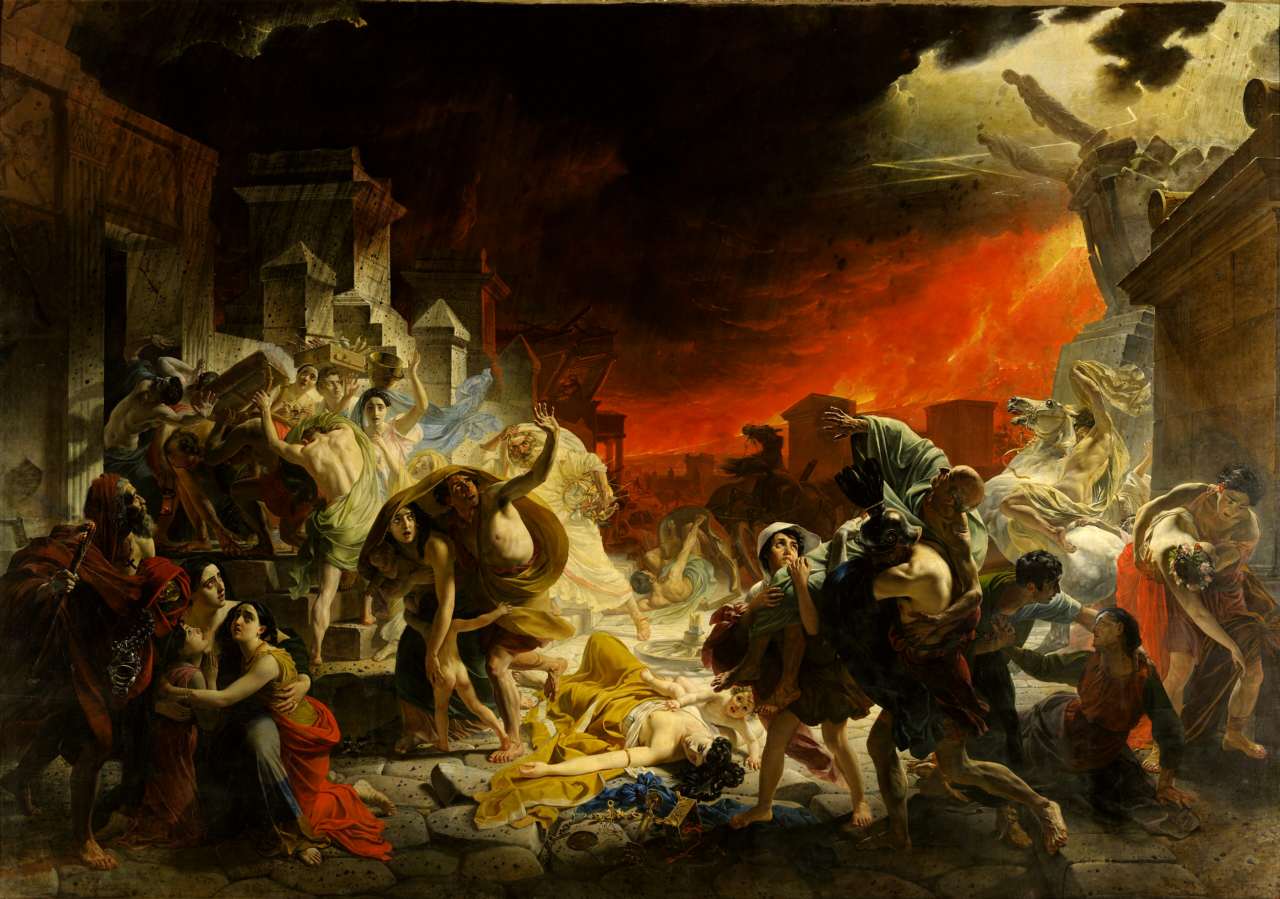
Local traditions - Pompeii Karl Bryullov · Public domain

Local traditions

Annual archaeological conferences: Scholars gather to discuss findings and research.
Local festivals: Celebrations often include traditional music and food.
Guided night tours: Special events that offer a different perspective of the ruins.
Art exhibitions: Occasionally held in the site to showcase ancient art.

Do's and don'ts

Plan your route using maps before visiting.
Bring water to stay hydrated in the heat.
Take your time to appreciate the details in the ruins.
Consider visiting during the off-peak season for a quieter experience.
Don't rush through the site; there's much to see and learn.
Don't rely solely on food vendors near the entrance; explore further for better options.
Don't forget sunscreen; the sun can be intense.
Don't miss the opportunity to explore lesser-known areas of the site.

Practical

At a glance

Founded
600 BC
Population
25.000
Accessibility
Some areas are wheelchair accessible, but many have steep paths.
Price level
Mid-range

Things to know

Expect crowds, especially during peak tourist season from April to October; consider visiting early or late in the day.
Tickets are limited to 20,000 per day; buy in advance to avoid disappointment.
Be prepared for uneven terrain; wear comfortable shoes.
Watch for pickpockets in crowded areas.
history_eduHistoryexpand_more

Pompeii was established around 600 BC and came under Roman control around 200 BC. The city flourished with trade and culture, featuring impressive architecture and public spaces. On August 24, 79 AD, Mount Vesuvius erupted, burying Pompeii in ash and preserving it for centuries. Excavations began in the 18th century, revealing a wealth of artifacts and insights into daily Roman life.

Photo credits (1)