Verona
Verona offers a blend of history and culture, with its Roman ruins and medieval architecture. The city feels less crowded than Venice, allowing for a more relaxed exploration of its streets and sights.
Read more
Visitors can enjoy the charm of its piazzas and the beauty of the Adige River. The atmosphere is enriched by local cafes and restaurants, where you can savor authentic Italian cuisine.
Highlights
Castelvecchio Museum
Features art and artifacts from Verona's history
Juliet's House
Famous for its connection to Shakespeare's play
Ponte Pietra
An ancient bridge with great views
Verona Cathedral
A beautiful example of Romanesque architecture
Sightseeing
Things to do
Local food and drinks
Local traditions
Do's and don'ts
Practical
At a glance
- Founded
- 100 BC
- Population
- 260.000
- Accessibility
- The city has some cobbled streets, but many areas are accessible.
- Price level
- Mid-range
Things to know
History
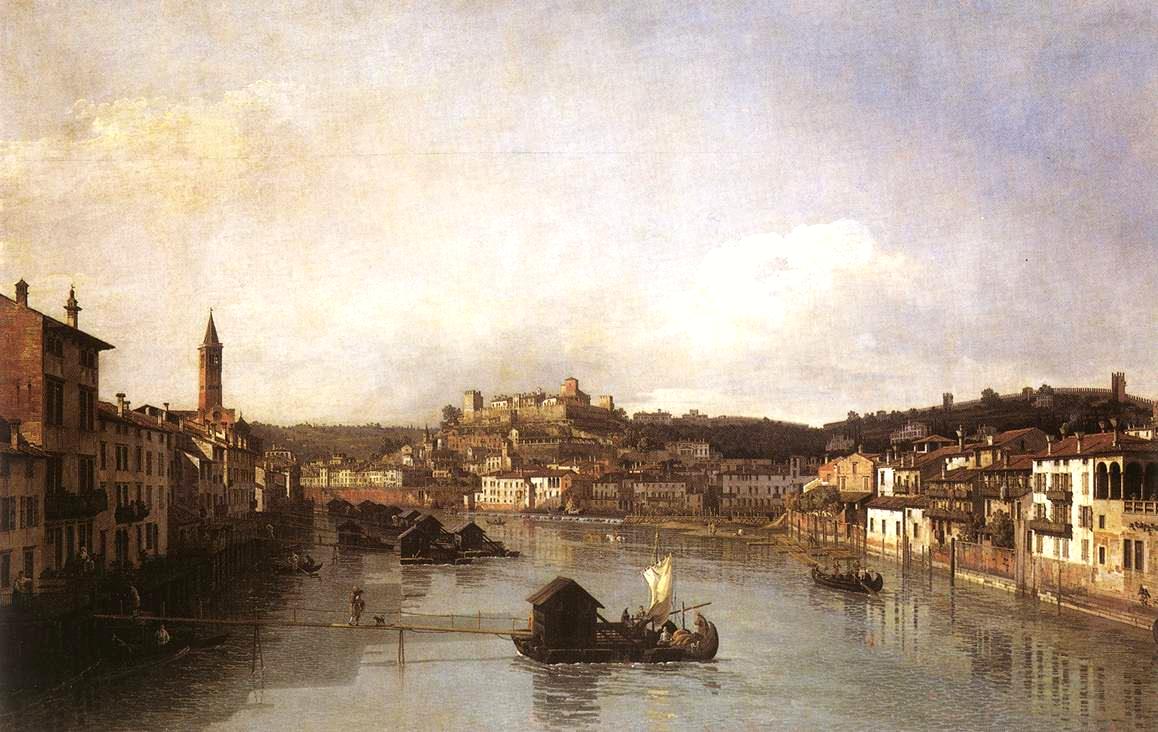 Bernardo Bellotto · Public domain
Verona's history dates back to Roman times, with significant ruins still visible today. The city suffered a devastating earthquake in 1117, leading to extensive rebuilding efforts that shaped its current architecture. Over the centuries, Verona became a vital military and cultural center, especially under the Scaligeri family from the 12th to 14th centuries. This period left a lasting impact on the city's art and architecture.
Photo credits (1)
- Bernardo Bellotto · Public domain · Wikimedia Commons