Explore the history of Presidio Modelo
Presidio Modelo, a former prison, stands as a testament to the island's complex past. Built in the early 20th century, it housed political prisoners, including Fidel Castro. Today, visitors can wander through its eerie halls and learn about the stories that shaped Cuba's history. The architecture is striking, with its circular design and crumbling walls. Guided tours provide insights into the lives of those who were imprisoned here. Be prepared for a somber atmosphere, but also a sense of connection to the island's revolutionary spirit.
 NASA · Public domain
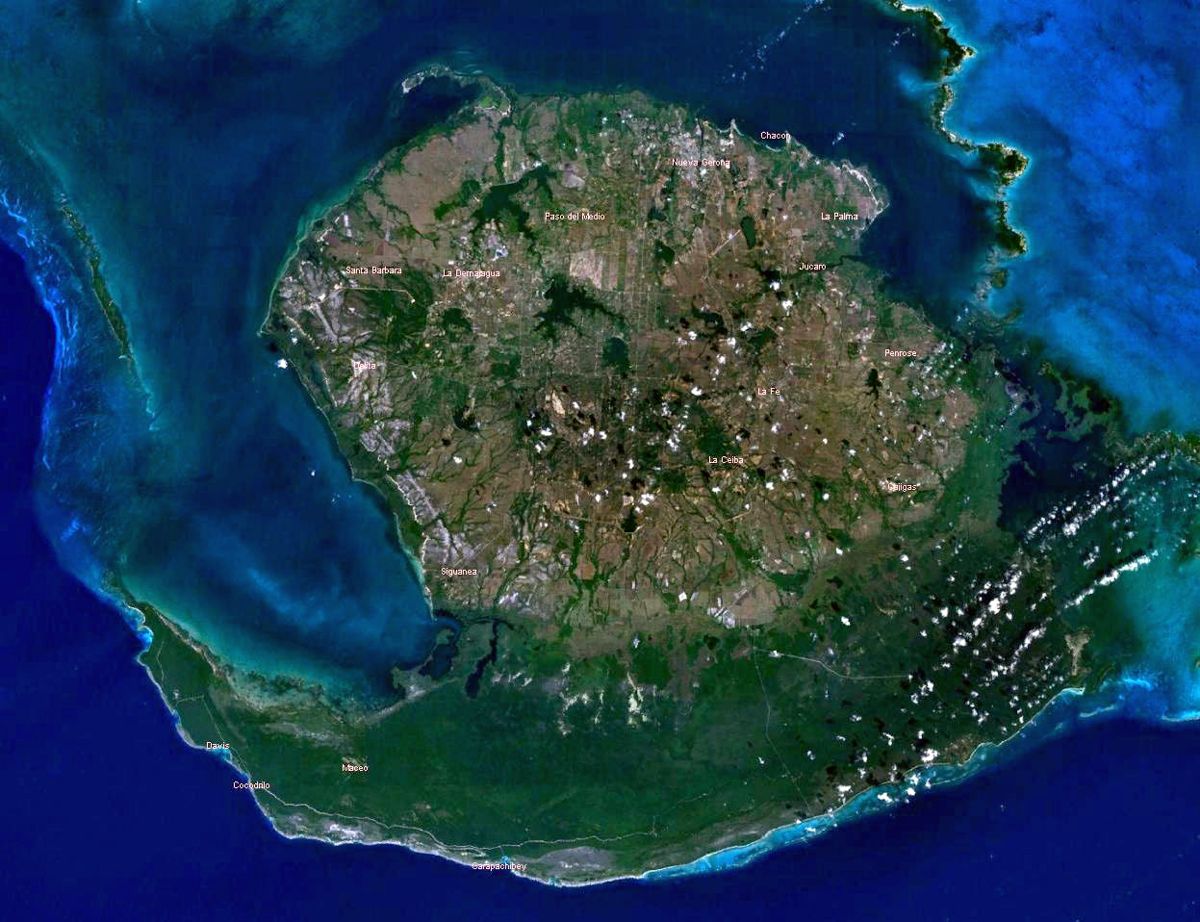
Relax on Isla de la Juventud's beaches
The beaches of Isla de la Juventud are a draw for those seeking tranquility. Playa Bibijagua, with its soft white sand and clear waters, is perfect for sunbathing or a leisurely swim. The island's coastline is dotted with spots ideal for snorkeling, where you can see colorful fish and coral. While some areas can get crowded during peak season, many stretches remain peaceful. Bring your own snacks and drinks, as amenities can be limited. This is a place to unwind, listen to the waves, and enjoy the natural beauty.
Discover the architecture of Presidio Modelo
The architecture of Presidio Modelo is both haunting and fascinating. Its circular layout was designed to facilitate surveillance, making it a unique example of prison design. As you walk through the grounds, you can see remnants of the past, including old cells and guard towers. The site is not just about the structure; it tells stories of resilience and struggle. Photography enthusiasts will appreciate the contrast of the crumbling walls against the lush greenery surrounding the prison. Visiting here offers a deeper understanding of the island's history and its impact on Cuba.