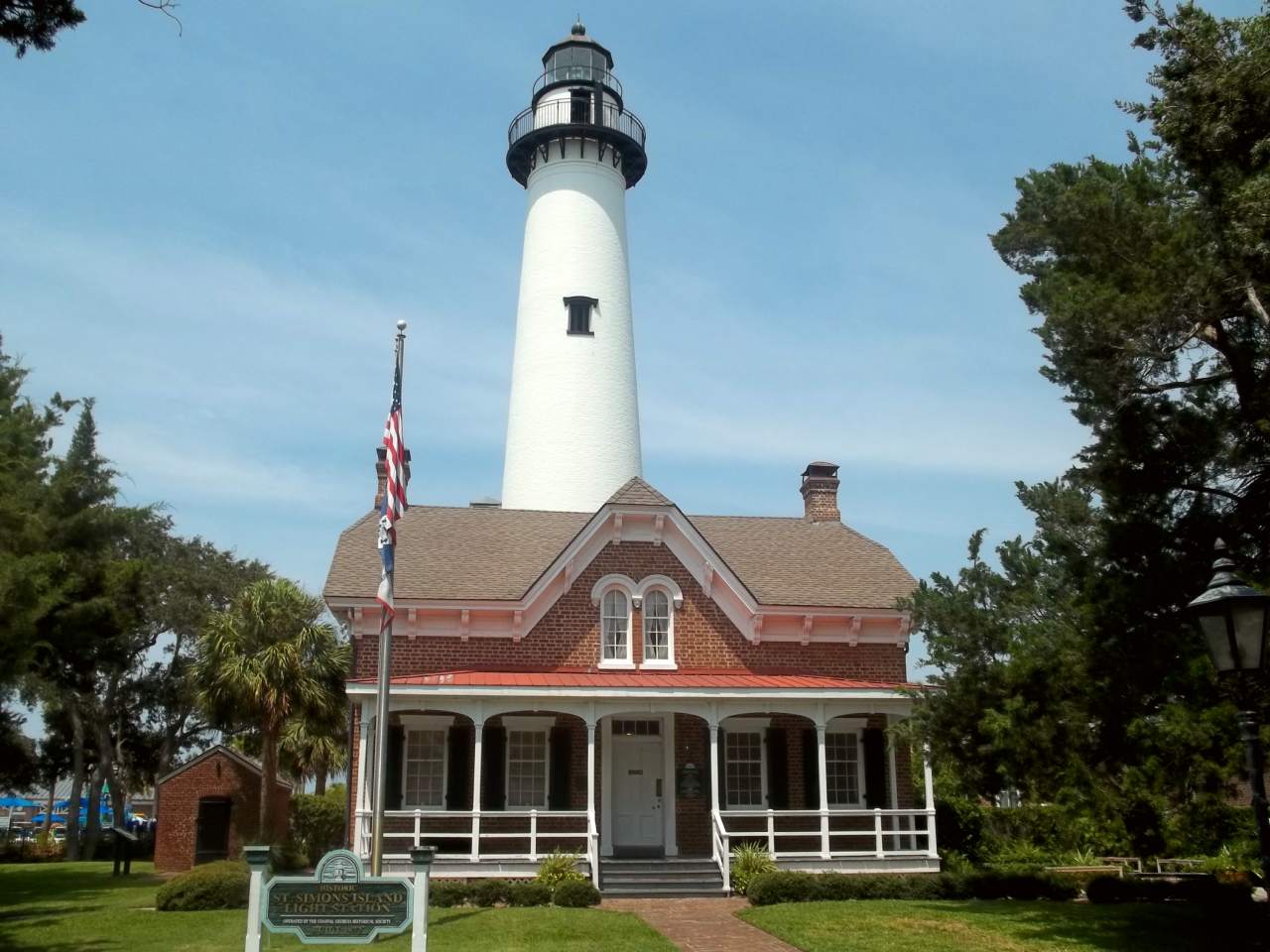
St. Simons
St. Simons is a barrier island on the Georgia coast, reached by a causeway from Brunswick. Live oaks draped in Spanish moss line the roads, and the pace is slow. Most visitors settle into a cottage or condo and let the days blur together on the beach.
Read more
The village end, near the pier and lighthouse, has the shops and restaurants. The rest of the island is residential, marsh, and golf. Bikes are the natural way to get around, and the flat terrain makes it easy.
Highlights
Avenue of the Oaks
Oak canopy at the former Retreat Plantation
Christ Church Frederica
White clapboard church rebuilt in the 1880s under oaks
East Beach
Main swimming beach, wide at low tide
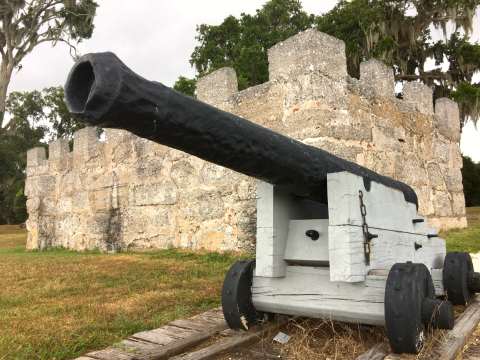
Fort Frederica National Monument
Ruins of Oglethorpe's 1730s fort and town
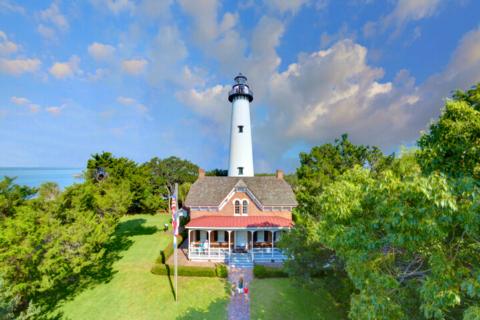
Jekyll Island
Jekyll Island sits off the Georgia coast within the Golden Isles, a few miles from St. Simons Island, Sea Isla
Neptune Park
Waterfront park by the pier with pool and playground
St. Simons Lighthouse
Working 1872 light with harbor views from the top
Sightseeing
Things to do
Local food and drinks

Local traditions
Do's and don'ts
Practical
At a glance
- Founded
- Fort Frederica founded 1736
- Population
- 15.000
- Accessibility
- Flat terrain and village sidewalks are workable, though the lighthouse stairs and some beach access are not step-free.
- Price level
- Mid-range
Things to know
History
The Guale people lived here first, then Spanish missions arrived in the 1500s. In 1736 James Oglethorpe built Fort Frederica to guard the young Georgia colony against Spain. Two years later British troops beat back a Spanish force at the nearby Battle of Bloody Marsh, which helped settle who would control the region.
By the 1800s the island grew cotton and grew rich on enslaved labor, with Retreat and Hamilton among the plantations. After the Civil War it turned to timber and then tourism. The causeway opened in 1924 and made the island a resort, which it has stayed ever since.
Photo: Wikipedia / Wikimedia Commons