search
search
add New trip
Destinations › … › Portugal › Alentejo

Evora

calendar_monthMar–May, Sep–Novbest time schedule2 daysplan for directions_car1 h 37from Lisbon child_careYeswith kids confirmation_numberMid-rangeprice
EvoraYour own route Plan a trip here →

Evora sits inside medieval walls on a low hill in central Alentejo, about 90 minutes east of Lisbon by car. The old town is compact, paved in worn granite, and easy to cross on foot in twenty minutes. Whitewashed houses, arches, and a Roman temple share the same few streets.

Read more

It feels lived-in rather than staged. University students fill the cafes in term time, and the pace slows to almost nothing in the August heat. Come in spring or autumn if you can. Summer afternoons can hit the high 30s Celsius.

Routes through here

Every route opens in the planner as your own copy: change any stop, any night.

Sightseeing

Roman Temple: First-century columns on the highest point, free to view outside.
Se Cathedral: Granite Gothic church, climb to the roof for rooftop views.
Capela dos Ossos: Chapel lined with bones and skulls of some 5,000 people.
University of Evora: 16th-century cloisters with painted tile panels.
Praca do Giraldo: Main square with a marble fountain and arcades.
Agua de Prata Aqueduct: 16th-century channel with houses built into its arches.

"Roman temple, bones, and Alentejo wine"Evora

Things to do

Walk the walls: You can loop the old town perimeter on foot in about 40 minutes.
Wine tasting: Sample Alentejo reds at local cellars like Herdade do Esporão.
Cork shopping: Find bags and other items made from local cork oak at shops around the city.
Day trip to megaliths: Visit Cromeleque dos Almendres, a site of standing stones located 15 km west.
Market morning: Enjoy fresh cheese and produce at the town market on Saturdays.
Sunset at the temple: Watch the golden light illuminate the Corinthian columns of the Temple of Diana.

Local food and drinks

Migas: Fried bread with pork and garlic, a heavy Alentejo staple.
Acorda alentejana: Bread soup with coriander, garlic, and a poached egg.
Carne de porco a alentejana: Pork with clams, an odd but classic pairing.
Queijo de Nisa: Sheep's cheese from the region, sharp and firm.
Alentejo wine: Robust reds; ask for a house tinto by the glass.
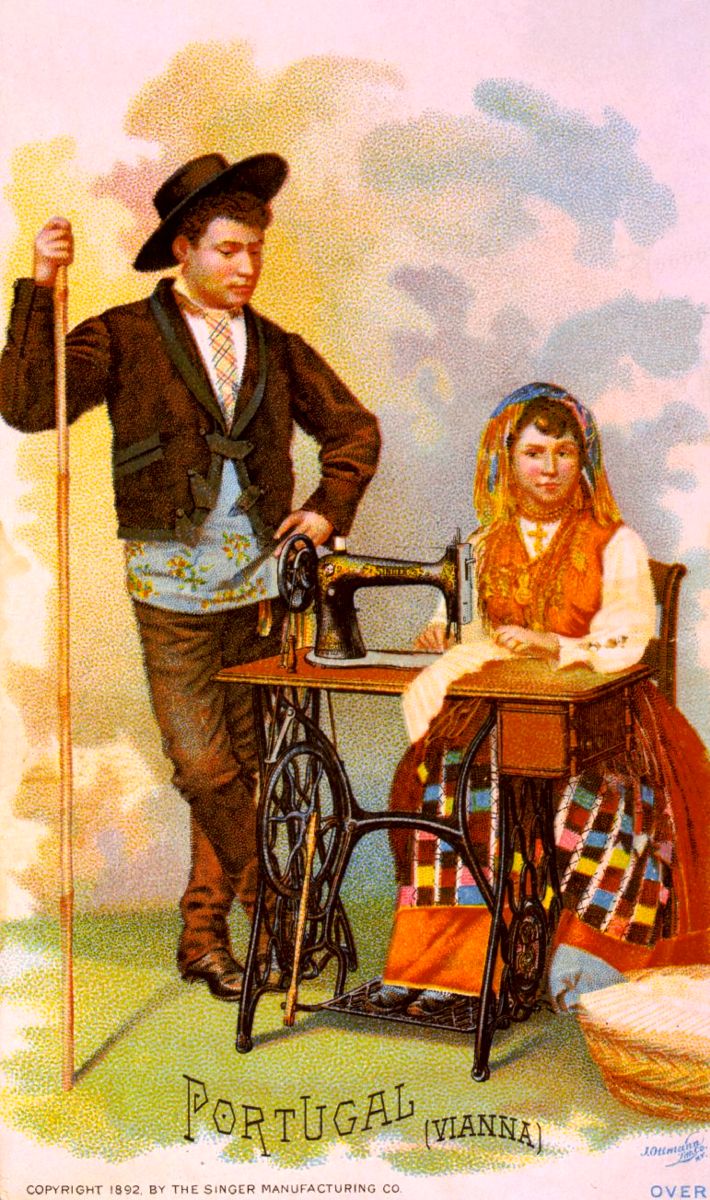
Local traditions - Evora Singer Manufacturing Co. · Public domain

Local traditions

Feira de Sao Joao: Late June fair with music, food stalls, and rides.
Easter processions: Solemn walks through the old town in Holy Week.
Cante alentejano: Unaccompanied group singing, listed by UNESCO.
Pottery of Sao Pedro do Corval: Painted ceramics sold nearby.

Do's and don'ts

Book wine tastings ahead in high season.
Carry cash for smaller cafes and the market.
Wear flat shoes for the granite cobbles.
Try the local cheese and bread even if you skip the meat dishes.
Don't expect nightlife beyond a few bars.
Don't drive into the old town without checking parking first.
Don't rush the Capela dos Ossos; read the entrance inscription.
Don't visit only in midsummer if heat bothers you.

Practical

At a glance

Founded
Roman times, around 1st century BC
Population
55.000
Accessibility
Cobbled streets and slopes make wheelchair use hard, though main squares and the cathedral area are manageable.
Price level
Mid-range

Things to know

Summer heat can be intense: August afternoons often reach over 35°C, plan for indoor activities during peak hours.
Parking is limited within the city walls: Use the lots outside and walk in.
Many shops close for lunch: Expect closures from around 13:00 to 15:00.
Trains from Lisbon take about two and a half hours: Buses are usually quicker and run more frequently.
history_eduHistoryexpand_more

Evora was a Roman town called Ebora Liberalitas Julia, and the temple in the centre dates from that era. Moors held it for centuries until Christian forces took it in 1165, led according to legend by Geraldo Sem Pavor, the fearless.

It became a favourite of Portuguese kings and grew rich in the 15th and 16th centuries, when the university was founded in 1559. Decline followed the closure of that university in 1759. The old town survived largely intact and became a UNESCO World Heritage Site in 1986.