Evora
Evora sits inside medieval walls on a low hill in central Alentejo, about 90 minutes east of Lisbon by car. The old town is compact, paved in worn granite, and easy to cross on foot in twenty minutes. Whitewashed houses, arches, and a Roman temple share the same few streets.
Read more
It feels lived-in rather than staged. University students fill the cafes in term time, and the pace slows to almost nothing in the August heat. Come in spring or autumn if you can. Summer afternoons can hit the high 30s Celsius.
Highlights
Capela dos Ossos
A unique chapel that intrigues visitors.
Cromeleque dos Almendres
Prehistoric standing stones west of town.
Museu de Évora
Showcases the region's rich history.
Praca do Giraldo
Central square with fountain and arcades.
Roman Temple of Evora
The city's landmark Roman columns on the hilltop.
Se Cathedral of Evora
Granite Gothic cathedral with rooftop access.
Templo Romano
A fascinating glimpse into Roman history.
University of Evora
Renaissance cloisters with painted tiles.
Évora Cathedral
Offers stunning views of the city.
Routes through here
Every route opens in the planner as your own copy: change any stop, any night.
Sightseeing
Things to do
Local food and drinks
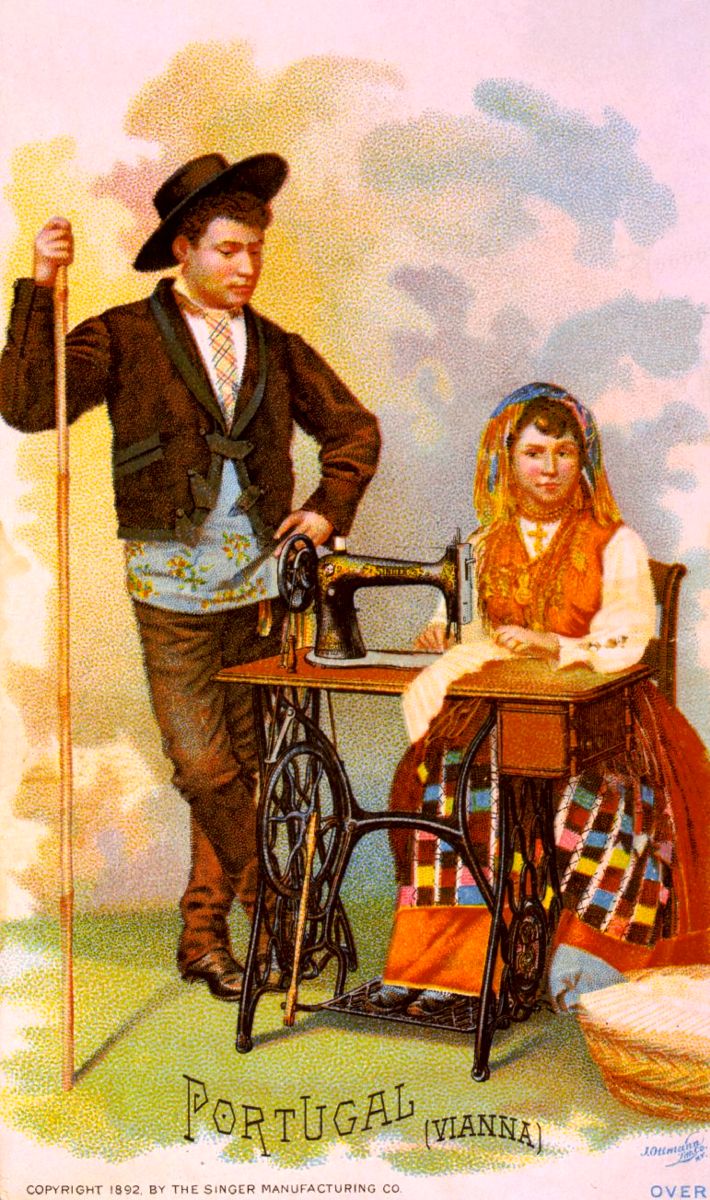 Singer Manufacturing Co. · Public domain
Local traditions
Do's and don'ts
Practical
At a glance
- Founded
- Roman times, around 1st century BC
- Population
- 55.000
- Accessibility
- Cobbled streets and slopes make wheelchair use hard, though main squares and the cathedral area are manageable.
- Price level
- Mid-range
Things to know
History
Evora was a Roman town called Ebora Liberalitas Julia, and the temple in the centre dates from that era. Moors held it for centuries until Christian forces took it in 1165, led according to legend by Geraldo Sem Pavor, the fearless.
It became a favourite of Portuguese kings and grew rich in the 15th and 16th centuries, when the university was founded in 1559. Decline followed the closure of that university in 1759. The old town survived largely intact and became a UNESCO World Heritage Site in 1986.