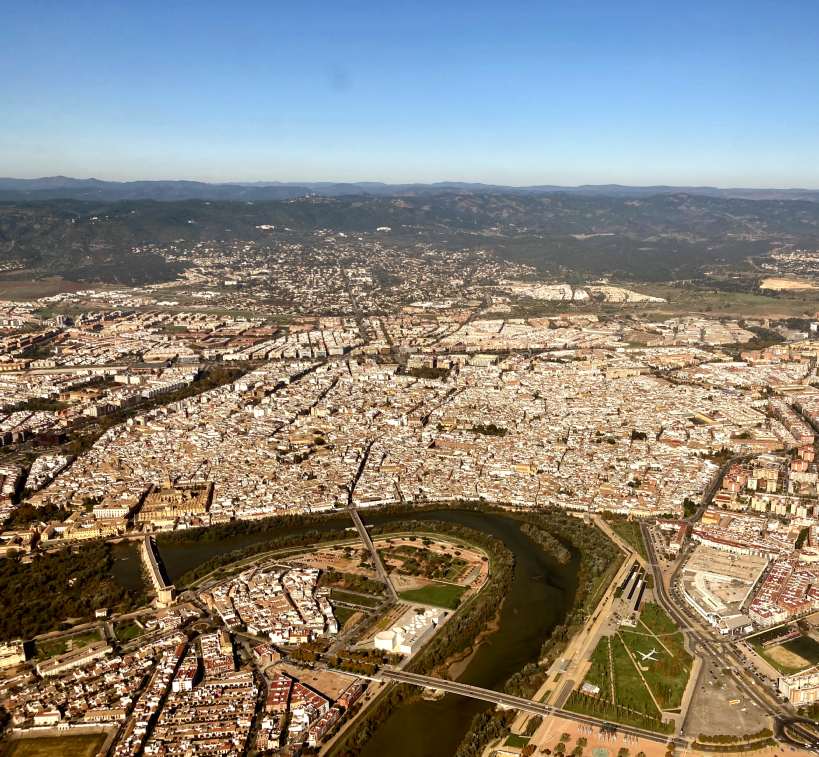
Cordoba
Cordoba is a small city you can cross on foot in an afternoon, but its old quarter rewards slow walking. The lanes near the Mezquita are narrow and often quiet by evening, when the crowds thin and the whitewashed walls hold the day's heat.
Read more
In May the patios open to visitors and the geraniums are at their peak. In July and August the temperature regularly passes 40C, so mornings and late evenings are the only comfortable hours. The Guadalquivir river and the Roman bridge anchor the southern edge.
Highlights
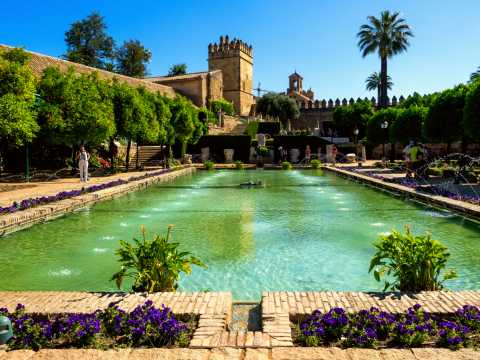
Alcazar de los Reyes Cristianos
Fortress with mosaics and terraced water gardens.
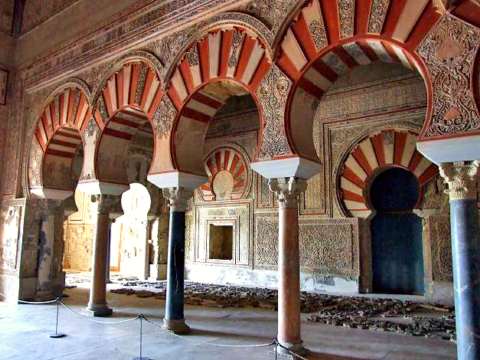
Medina Azahara
Ruins of a 10th century caliphal palace city.
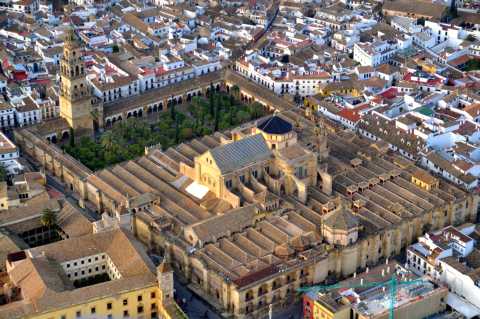
Mezquita-Catedral
Forest of red and white arches with a cathedral inside.
Palacio de Viana
Noble house arranged around 12 planted patios.
Roman Bridge
16-arch bridge over the Guadalquivir, free to cross.
Synagogue of Cordoba
One of few surviving medieval synagogues in Spain.
Routes through here
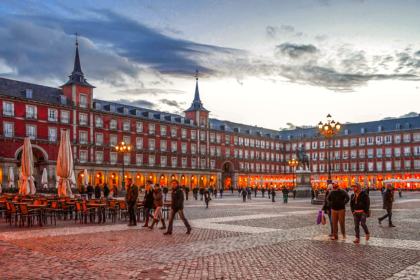
Every route opens in the planner as your own copy: change any stop, any night.
Sightseeing
Things to do
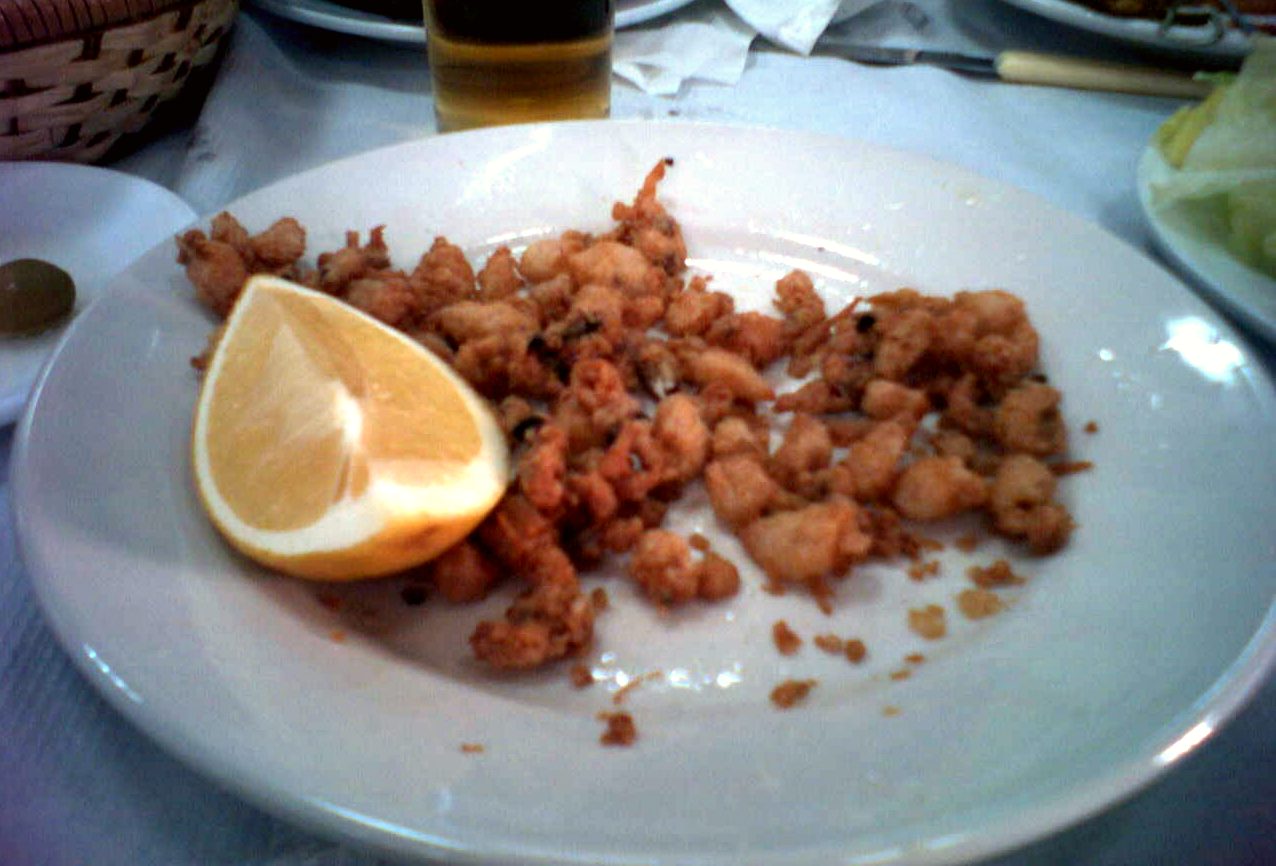
Local food and drinks
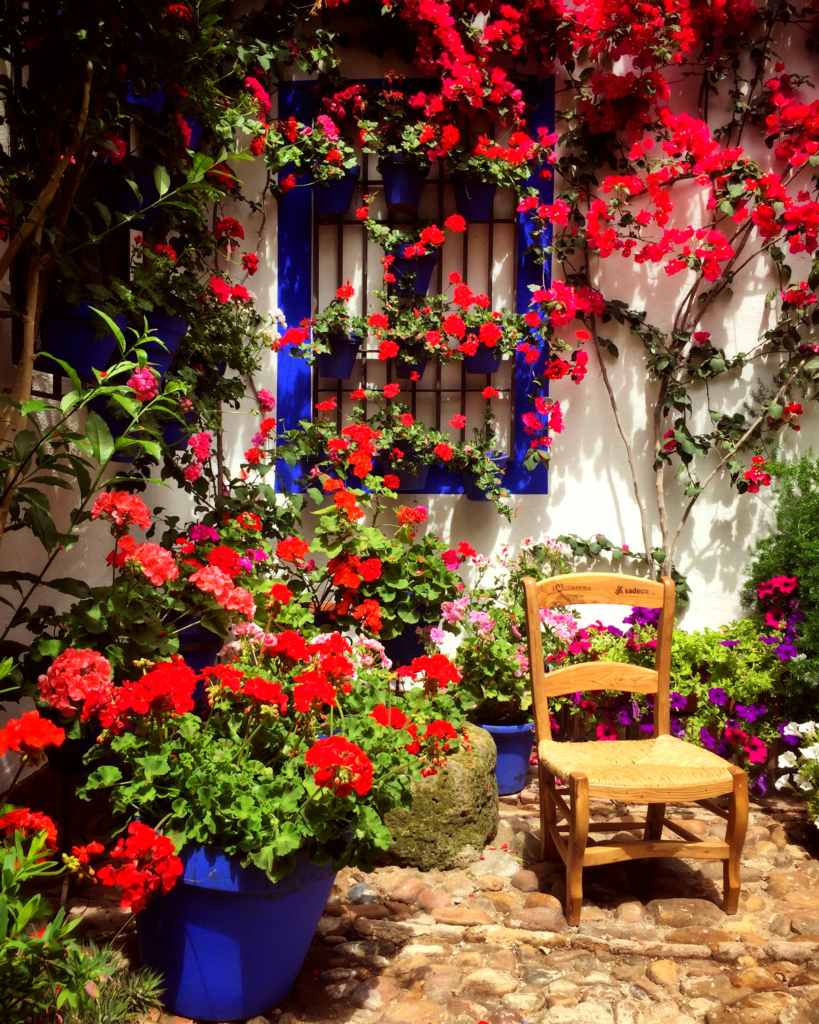
Local traditions
Do's and don'ts
Practical
At a glance
- Founded
- 169 BC
- Population
- 325,000
- Accessibility
- Main sights like the Mezquita and Alcazar are mostly step-free, but old town cobbles are rough.
- Price level
- Mid-range
Things to know
History
Cordoba was a Roman colony from around 169 BC and later capital of the province of Baetica. The poet Seneca was born here. Under Muslim rule from 711 it became the seat of the Umayyad Emirate and then Caliphate, and by the 10th century it was one of the largest cities in Europe, known for its libraries and scholars.
Christian forces took the city in 1236 and the great mosque became a cathedral. Cordoba then declined for centuries as trade shifted elsewhere. Its layered past, Roman, Islamic and Christian, is still visible within a few hundred metres of the Mezquita.
Photo: Wikipedia / Wikimedia Commons