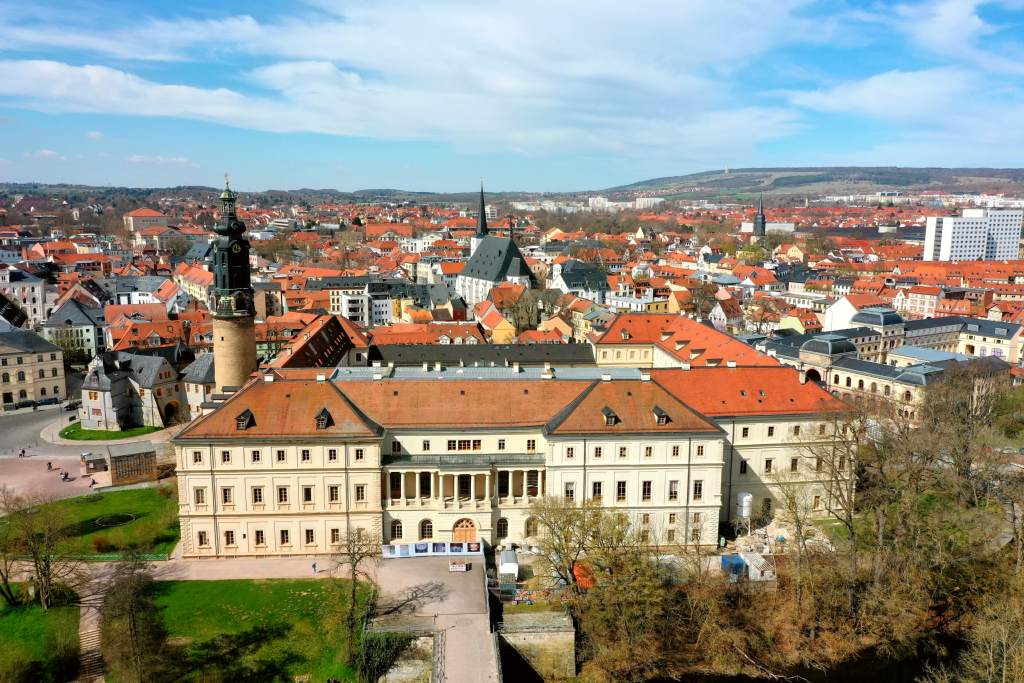
Weimar
Weimar is a city steeped in literary and cultural history. Walking through its streets, you can almost hear the echoes of Goethe and Schiller, who once called this place home. The architecture reflects its rich past, with buildings that tell stories of the Weimar Republic and the Bauhaus movement.
Read more
The compact size of Weimar makes it easy to explore on foot. You can visit museums, theaters, and memorials all within a short walk. However, be prepared for some uneven cobblestones and occasional steep paths that might challenge those with limited mobility.
Highlights
Bauhaus Museum
Engaging exhibits on design and architecture
Buchenwald Memorial
A poignant historical site
Goethe National Museum
Insight into Goethe's life and works
Schiller Museum
Celebrates the life of Friedrich Schiller
Sightseeing
Things to do

Local food and drinks

Local traditions
Do's and don'ts
Practical
At a glance
- Founded
- 800 AD
- Population
- 65.000
- Accessibility
- Some areas are challenging for wheelchair users
- Price level
- Mid-range
Things to know
History
Weimar has a rich history that dates back to the Middle Ages. It became a cultural center in the late 18th century, largely due to the influence of writers like Goethe and Schiller. The city was also the birthplace of the Weimar Republic, which marked a significant period in German history from 1919 to 1933.
In the 20th century, Weimar became associated with the Bauhaus movement, which revolutionized art and architecture. Today, the city is recognized for its contributions to literature, philosophy, and design, attracting visitors interested in its storied past.
Photo: Wikipedia / Wikimedia Commons