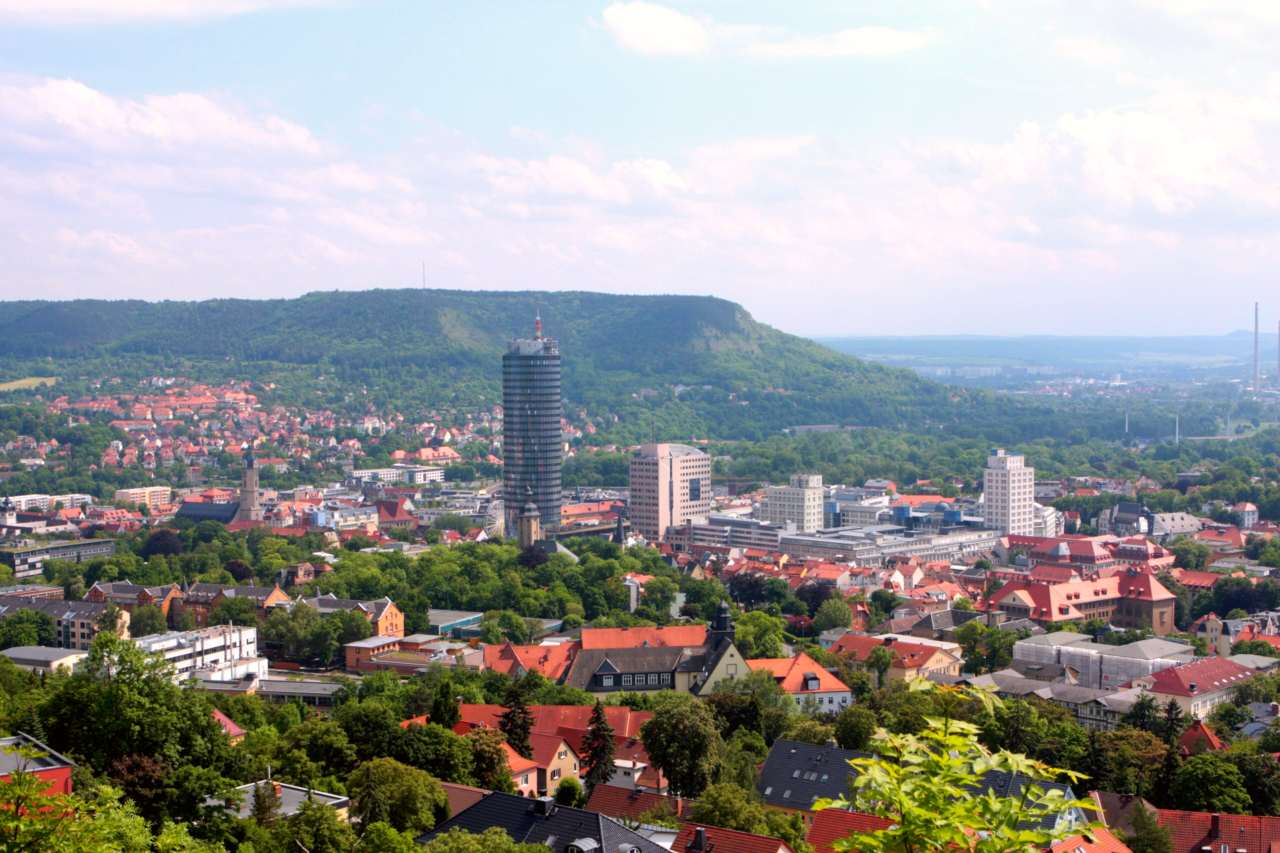
Jena
Jena is a city where academia meets history. With a significant student population, the atmosphere is lively yet relaxed, especially around the university area. The historical architecture adds a unique charm, making it pleasant to stroll through the streets.
Read more
Visitors can explore the old town, where the Markt square serves as a focal point. The blend of modern life and historical sites creates an engaging environment, though some areas may feel quieter outside of university terms.
Highlights
Jenaer Philharmonie
Enjoy classical music in a family-friendly setting
Theaterhaus Jena
Local theater with family-friendly performances
Zeiss-Planetarium
Educational and entertaining shows for families
Sightseeing
Things to do

Local food and drinks

Local traditions
Do's and don'ts
Practical
At a glance
- Founded
- 900 AD
- Population
- 110.000
- Accessibility
- Most areas are accessible, but some historic sites may have limitations.
- Price level
- Mid-range
Things to know
History
Jena's history dates back to at least the 9th century, evolving into a town by 1230. It became part of Thuringia in 1920 and was incorporated into East Germany in 1949. The city has seen significant changes since reunification in 1990, returning to its roots in a unified Germany.
The presence of Friedrich Schiller University, founded in 1558, has shaped Jena's identity. With a high student-to-resident ratio, the city thrives on its academic environment, influencing culture and local life.
Photo: Wikipedia / Wikimedia Commons